
#LandscapeArchitecture
Landscape architecture - the importance of Mediterranean gardens
It is becoming increasingly easy to find amazing examples of sustainable landscape architecture projects that are based on Mediterranean gardens. The reason is simple: they are environmentally friendly, require little maintenance and water, and add a special charm to the building.
08/06/2022

Mediterranean gardens: a sustainable solution for landscape architecture in Portugal
Landscape architecture plays an increasingly important role in creating sustainable, functional outdoor spaces that are integrated into their surroundings. Beyond its aesthetic aspect, contemporary landscape architecture seeks to establish a balanced relationship between buildings, nature, and available resources, reducing environmental impact and promoting more efficient use of water and energy.
In this context, Mediterranean gardens take on special significance. Adapted to the climatic characteristics of the countries in the Mediterranean basin, they represent one of the most sustainable solutions for landscape architecture projects in Portugal.
What are Mediterranean gardens?
Mediterranean gardens are green spaces designed using plant species adapted to the Mediterranean climate, which is characterized by mild, rainy winters and hot, dry summers.
Portugal, like Spain, southern France, Italy, and Greece, benefits from this type of climate, making these species particularly well-suited to the region’s natural conditions.
Unlike gardens that rely on intensive irrigation or frequent maintenance, Mediterranean gardens favor drought-tolerant plants that are well-adapted to the region’s natural cycles and capable of thriving with minimal resource consumption.
In addition to their ecological value, these species are part of the natural and cultural heritage of southern Europe, contributing to the preservation of the landscape identity of the regions where they are found.
Why Mediterranean gardens are a sustainable solution
Sustainability is one of the main advantages of Mediterranean gardens. The use of native species or those adapted to the local climate significantly reduces the need for watering, fertilization, and maintenance.
In a context where efficient water management is increasingly important, especially in regions prone to prolonged periods of drought, this type of garden offers clear benefits from both an environmental and economic standpoint.
Furthermore, the reduced need for intervention helps lower energy consumption associated with the maintenance of outdoor spaces, making Mediterranean gardens a particularly suitable option for residential, tourism, and urban renewal projects.
Landscape architecture and integration with the surrounding area
One of the fundamental principles of sustainable landscape architecture is the harmonious integration of outdoor spaces into the surrounding environment.
Mediterranean gardens allow for the creation of landscapes that respect the natural characteristics of the site, highlighting the topography, existing vegetation, and available resources. This approach helps create spaces that are more balanced, resilient, and prepared to face the environmental challenges of the future.
It was precisely this vision that inspired the work of Gonçalo Ribeiro Telles, one of the most influential figures in landscape architecture in Portugal. An advocate for the enhancement of the Mediterranean landscape and the use of species adapted to the territory, his thinking continues to influence many contemporary projects.
At Metathesis, these principles have been integrated into various projects, seeking to create outdoor spaces that balance sustainability, functionality, and aesthetic quality.
Planning a Mediterranean garden
Creating a Mediterranean garden requires a careful analysis of the site’s characteristics and the specific needs of each project.
Before selecting plant species, it is important to understand factors such as sun exposure, the presence of shaded areas, drier or wetter zones, the slope of the terrain, and prevailing winds.
The proper arrangement of trees, shrubs, and other plants is equally crucial to ensuring their healthy growth and the overall balance of the landscape.
Good planning allows you to make the most of the space’s natural conditions, reduce future maintenance needs, and create more comfortable and long-lasting outdoor environments.
The Role of Mediterranean Gardens in Sustainable Landscape Architecture
À medida que a sustentabilidade ganha importância nos projetos de arquitetura e reabilitação urbana, os jardins mediterrânicos afirmam-se como uma das soluções mais adequadas para o contexto português.
A sua capacidade de otimizar recursos, reduzir consumos e valorizar a identidade local torna-os uma escolha natural para quem procura espaços exteriores mais sustentáveis e preparados para o futuro.
Mais do que uma tendência, representam uma forma de construir paisagens que respeitam o território, promovem a biodiversidade e contribuem para uma melhor relação entre o ambiente construído e a natureza.
Metathesis’ Vision
At Metathesis, we believe that landscape architecture should be considered an integral part of every project. Outdoor spaces are not merely a complement to architecture; they are fundamental elements for comfort, sustainability, and property value.
The integration of Mediterranean gardens allows us to create spaces that are more efficient, better suited to the Portuguese climate, and more aligned with a responsible vision of urban development.
Designing with nature, rather than against it, remains one of the essential principles for building more balanced and sustainable environments.
Mediterranean garden influences and plants used
Terracotta tones, clay pots and combination of different plants, characterize the identity of Mediterranean gardens.
The great amount of light, the choice of purer materials, and the almost non-existent finish, mark the architecture and decoration of the Mediterranean style.
The colors that most refer us to the Mediterranean universe are lime white, terracotta brown, and blue.
Materials such as wood, stone, and metal play a prominent role.
As for the plants used, the most recurrent are:
Ornamental Shrubs and Trees
Ornamental shrubs and trees need at least weekly watering, especially in summer. But they grow well in chalky soils, typical of this region, and have a strong decorative impact.

Tree examples: Mimosa, silk tree, cercis (tree of love) and ornamental cherry / Shrub examples: Boxwood and myrtle
Fruit Trees
There are some fruit trees that withstand drought periods well, and therefore fit very well in Mediterranean gardens, even during the summer.

Examples: Olive, Apple, Fig, Roman and Almond trees
Climbers
Climbers bring new life to your garden, especially those that produce brightly colored flowers.

Examples: Jasmine, wisteria and plumbago.
Flowers
Flower color is essential to bring any garden to life, and Mediterranean ones are no exception.

Examples: Roses, yellow daisies, Syriac hibiscus, sea fennel and geraniums.
Aromatic Plants
Besides being very easy to grow, herbs are easy to maintain and add a unique aroma to your garden.

Examples: Lavender, oregano, rosemary, thyme, basil, rosemary and mint.
Succulents
With different morphologies and shades, succulents are a great way to bring life and color to your garden.
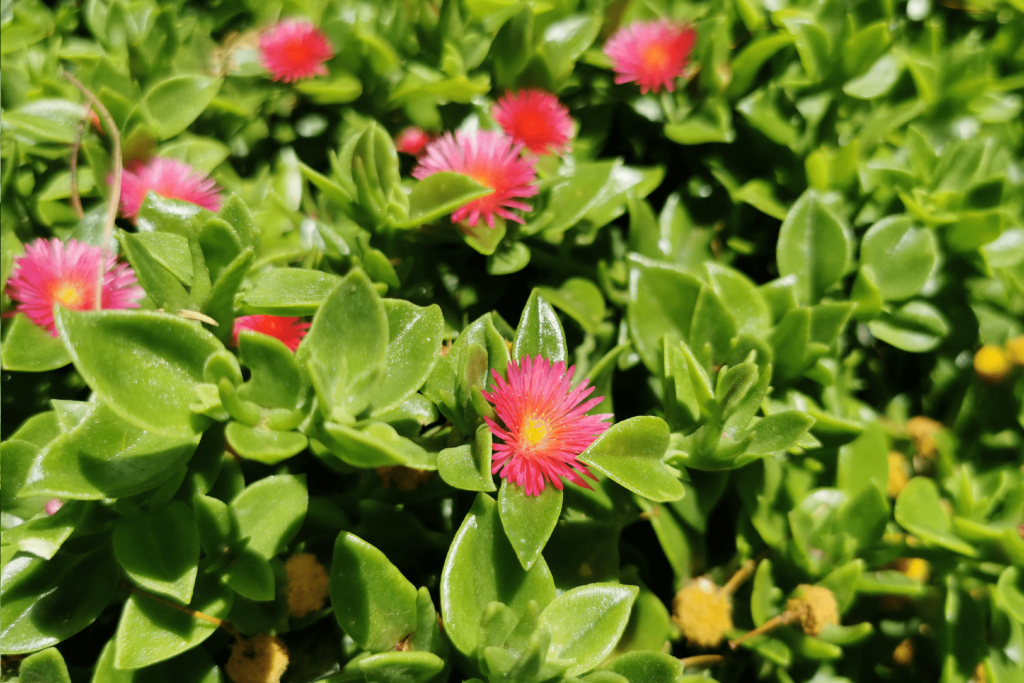
Examples: Aloe vera, sedum, agave and aptenia.
Inês Jardim is the landscape architect responsible for the Metathesis projects

The Metathesis projects have the signature of Architect Inês Jardim, an indispensable figure in landscape integration in Almada. Her career leaves no room for doubt.
Graduated from Instituto Superior de Agronomia, in Lisbon, she was a trainee in Direcção Geral dos Edifícios e Monumentos Nacionais, where she stayed for three years in the Portuguese landscape heritage area.
She specialized in Historic Gardens and Cultural Landscapes at the Escuela Técnica Superior de Arquitectura in Madrid and completed her Master’s in Recovery and Construction of the Built Patrimony at the Instituto Superior Técnico in Lisbon.
She is member no. 660 of the Portuguese Association of Landscape Architects (APAP), since 2005 having been a member of the Board (2012/2014).
Garden restoration is one of her main focuses. She is a founding member of the Portuguese Association of Historic Gardens (2003), of which she was a member of the Board for six years and remains on the Advisory Board. She also integrated the National Commission of the National Ecological Reserve (2013/2015).