
When the time to buy a house comes, whether to live in or as an investment, one of the first decisions is: new house or renovated house? At first glance, it may seem that a new house is always the safest option. However, a quality renovated house can offer advantages that often go unnoticed, both in terms of location and appreciation.
With over 20 years of experience in urban rehabilitatin on the South Bank of the Tagus River, Metathesis has already transformed more than 50 vacant and dilapidated properties into benchamrk residential projects. In this article, we compare the two options objectively to help you make the decision.
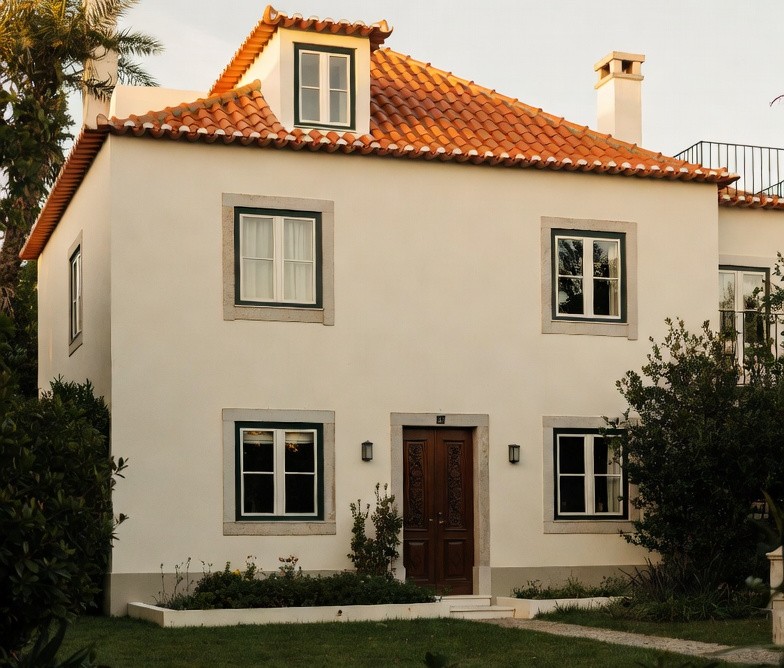
What Distinguishes a New House from a Rehabilitated House?
A new house is built from scratch, usually on available land in urban expansion areas, following contemporary architectural designs and the latest buildings standards.
A renovated house is part of an existing building, often old, derelict, or dilapidated, which is fully restored: structure, networks, insulation, and finishes are renewed maintaining (whenever is possible) elements with architectural and historical value, but guaranteeing the comfort and safety of a modern construction.
In practice, a quality renovated house can offer a level of comfort, energy efficiency, and finishes very similar to that of a new house, with the added advantage of character and location.
Location: Probably the Biggest Difference
This is perhaps the most significant difference between the two options.
New houses are, in most cases, built in urban expansion zones, newer areas, often on the outskirts of cities, where there is still land available for construction.
Renovated Houses are generally located in central and consolidated areas, where there is no longer space for new construction. This means proximity to commerce, services, transport, and often to historical areas with their own identity, something that is difficult to replicate in a new construction on the outskirts.
For those who value living (or investing) in a central area with all the urban infrastructure already estabilished tends to be the only way to achieve this.
Character and Identity vs. Total Customization
A new house often allows for greater customization from the start, from the distribution of spaces to the finishes; everything can be defined from scratch.
On the other hand, a quality renovated house manages to combine the best of both worlds: on the outside, it maintains the character, facade, and architectural identity of a building with history; on the inside, it offers a completely renovated home, with modern layouts, comfort, and energy equivalent to a new construction.
For many buyers and investors, this combination (exterior character with modern interior comfort) is precisely what makes renovated properties so attractive.
Energy Efficiency: Myth vs. Reality
There´s a common misconception that older houses are, by definition, energy inefficient. While this may be true for non-rehabilitated properties, a well-rehabilitated house can achieve energy efficiency levels very close to, or even equivalent to, those of a new construction through:
Updated thermal insulation in walls, roofs, and floors;
Replacement of window frames and glass;
Complete renovation of electrical, water, and sewage systems;
Efficient air conditioning systems
In other words, the “age” of the building refers to its exterior and location, not necessarily to its energy performance, which can (and should) be compared to that of a new construction during the rehabilitation process.
New House vs. Rehabilitated House: Investment Perspective
For those considering buying with investment objectives, whether for rental or resale, there are factors that weigh in favor of rehabilitation:
Premium Location, usually impossible to obtain in a new construction in a central area, simply because there is no available land.
Appreciation of the building after rehabilitation, which can be significant when compared to the acquisition value to the original property (vacant or dilapidated).
High demand from those seeking properties with character, in central areas, but with the comfort of a renovated home.
Contribution to urban regeneration, which tends to increase the value not only of the property itself, but also of the entire surrounding area over time
A new house may offer greater predictability in terms of delivery dated and the absence of “surprises” associated with older buildings, but generally in locations with urban consolidation and more limited short-term appreciation potential
So, Which to Choose?
There is no universal answer; it depends on the objective of each buyer or investor:
If the priority is total customization and predictability from day one, a new home may be the most straightforward option;
If the priority is central location, architectural, and appreciation potential, a quality renovated home tends to offer advantages that are hard to match
The most important factor, in either case, is ensuring that the project, whether new construction or renovation, is led by an experienced team capable of meeting expectations.
Metathesis´s Experience in Urban Rehabilitation
For over 20 years, Metathesis has been dedicated to the rehabilitation of historic properties in premium areas of the South Bank of the Tagus River, transforming derelict and dilapidated buildings into benchmark residential projects, always between preserving the original character and ensuring the comfort of a modern home.
If you are considering buying or investing in a rehabilitated home, explore our projects and discover how we combine history, location, and quality in every intervention.
Explore Metathesis´ portfolio and discover your next project. Contact Metathesis.